With the advancement of technology, the technology and performance of cooling fans are also constantly developing and improving. At present, the specifications and dimensions of heat dissipation fans range from a few millimeters to several hundred millimeters, and there are various voltage options, such as 5V, 12V, 24V, etc. In addition, there are also various shapes of heat dissipation fans, such as square, circular, olive shaped, etc.
In modern home life, technological progress has not only changed our way of life, but also improved our quality of life. The emergence of smart toilets is undoubtedly a major innovation in the bathroom field. They are equipped with heating seats, warm air drying, automatic flushing and other functions, making users feel extremely comfortable during use while effectively reducing the risk of infection caused by unclean bathroom facilities.
In the fast-paced modern life, the emergence of dishwashers has brought about earth shattering changes in our home life. Washing dishes is a tedious and time-consuming task that requires us to personally clean every dish, dry it, and store it in the sun.
The emergence of drones has provided us with new ways and perspectives to understand things. In the past decade, their applications have become increasingly popular. The express delivery industry, film and television shooting, monitoring and inspection, transportation, agriculture, forestry, police security, surveying and mapping, and other fields have shown a significant increase in demand for drones.
Date: 2025.12.11
View: 20
1. Core Parameters
Dimensions: 70×70×15mm (standard 7015 specification), suitable for installation in compact spaces.
Voltage: Supports 5V/12V/24V multi-voltage adaptation to meet different circuit design needs.
Speed: 2500-5300rpm (customizable), with a minimum noise level of 18.5dB for the silent model.
Power: 0.48-3.6W, current 0.02-0.37A, low energy consumption design.
Lifespan: The dual ball bearing version has a lifespan of up to 80,000 hours, suitable for long-term continuous operation.
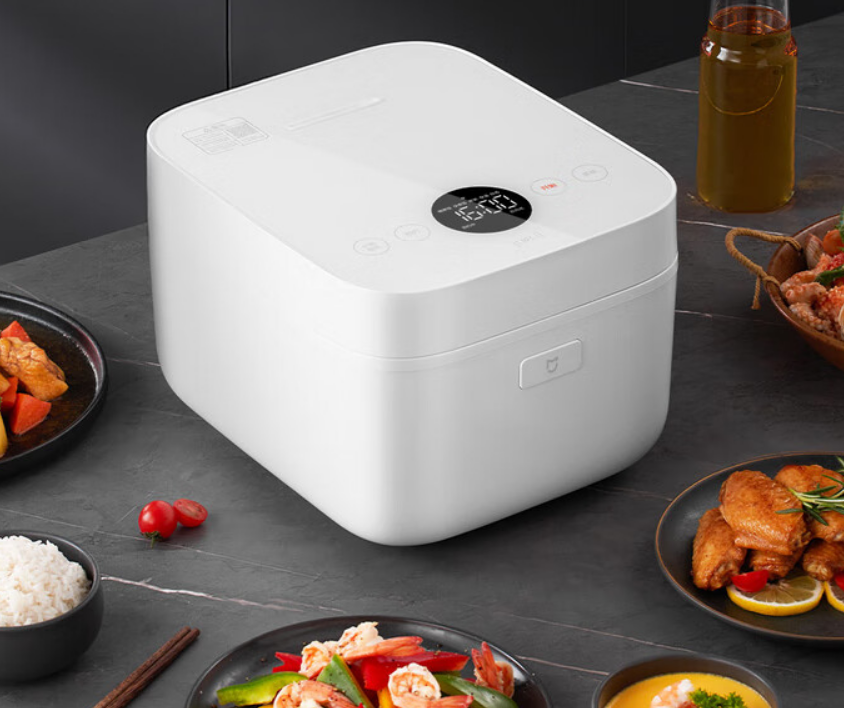
2. Heat Dissipation Performance
Airflow: 15.55-34.07CFM (approximately 0.44-0.96m³/min), efficiently removing heat accumulated inside the rice cooker.
Temperature Resistance: Operating temperature range -10℃ to +70℃, storage temperature -40℃ to +70℃, suitable for high-temperature kitchen environments.
Protection Rating: IP68 waterproof and dustproof (some models), suitable for steam environments.
3. Special Design Advantages
PWM Intelligent Speed Control: Supports automatic speed adjustment based on temperature sensing, balancing heat dissipation efficiency and noise.
Material: PBT 94V-0 flame-retardant plastic, compliant with electrical safety standards.
Waiting Sequence: Standardized red-positive, black-negative wiring, simplifying installation.

4. Rice Cooker Compatibility
Customization Service: OEM solutions with specific voltage/speed/wire length are available (e.g., 5V low-power version).
Application Examples: Similar 7015 fans are used in automatic cooking equipment and kitchen appliance cooling modules.
Note: Actual selection requires confirmation of the rice cooker's internal space structure's compatibility with a 70mm square fan, and testing the airflow convection effect is recommended. For high-pressure rice cookers (e.g., IH models), a 24V high-speed version is recommended to enhance heat dissipation.


0769-83660708 0769-83660718 135-2850-7673

+82-2-6093-6788 +82-10-6656-0330
No. 2, Hengfeng 2nd Road, DaWo, Changping Town, Dongguan City, Guangdong Province, China